For all ages

Start here: chaos in five minutes

You don’t need to know any math. Each experiment takes a tap or a finger, and next to it we tell you what just happened. Start with whichever you like.

01

Two almost identical pendulums

These two pendulums start at the same time from almost the same spot: the difference is so small you can’t see it. Press “Release!” and wait. How long do they stay together?

What just happened?

At first they move side by side, but that tiny difference grows and grows until each one goes its own way. This is the butterfly effect: in a chaotic system, a minuscule change at the start ends up changing everything. That is why the weather can’t be predicted beyond a few days.

Explore it in depth →

Preparing the experiment…

02

A drop that turns into a butterfly

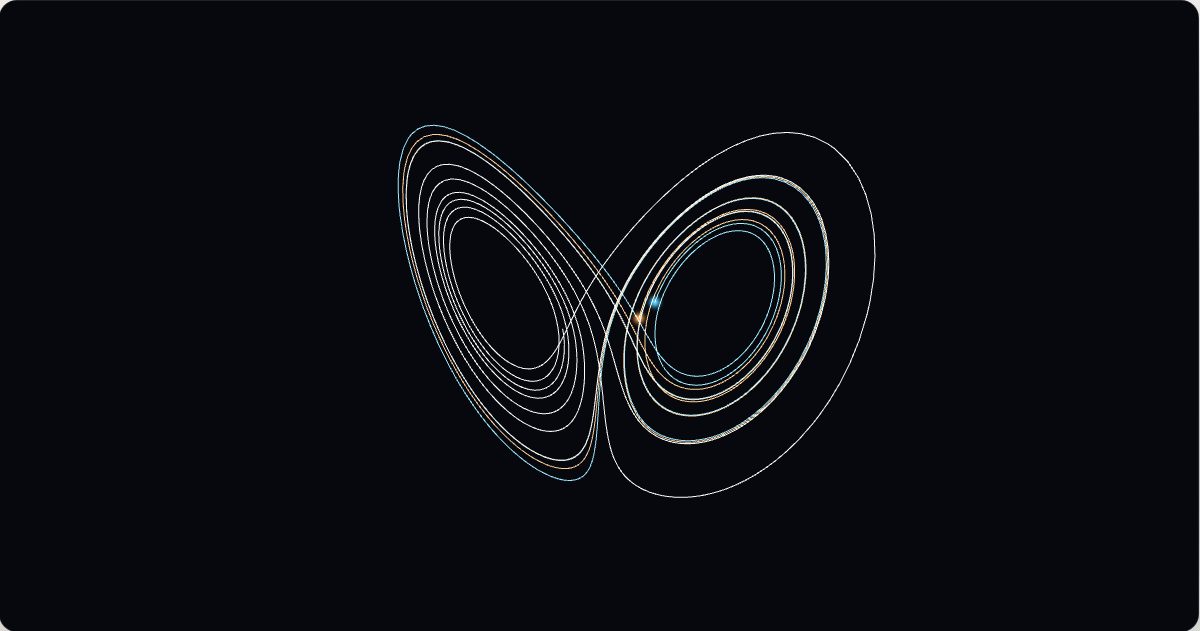
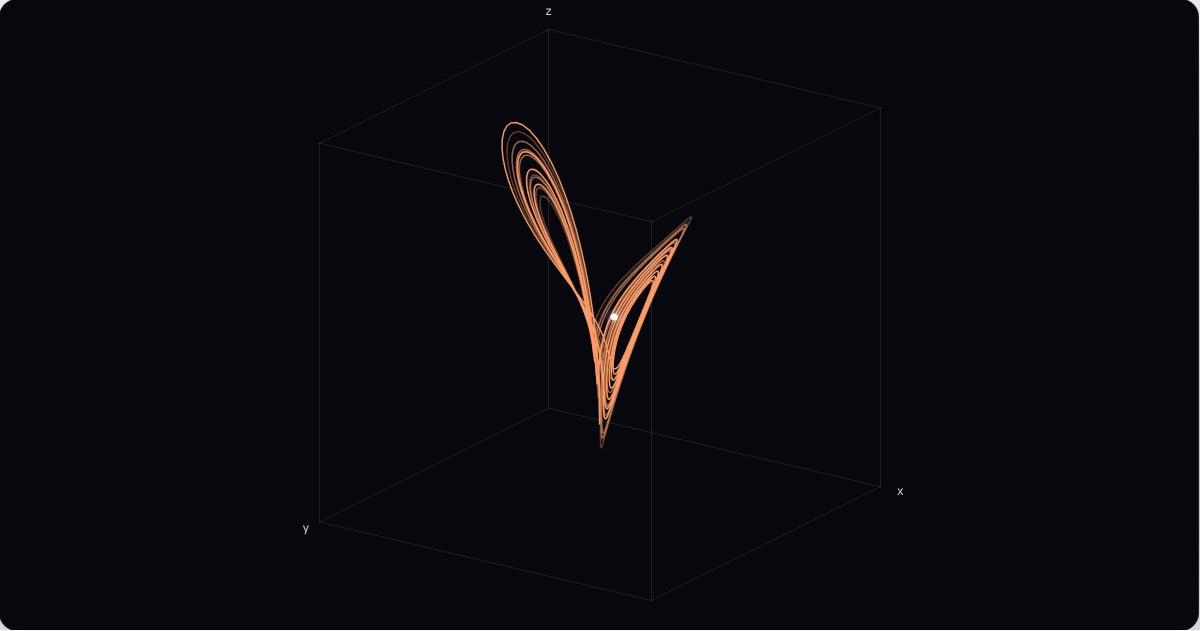
Tap the canvas to release a drop of 1,500 dots, all in almost the same spot. Watch what they do.

What just happened?

Every dot follows the same three simple rules, the ones found by the meteorologist Edward Lorenz. Because they start almost together, at first they travel as a group; but soon they split up and spread over two wings. It doesn’t matter where you release the drop: they always end up drawing the same shape, the Lorenz attractor. Chaos is not disorder: it has a shape.

Explore it in depth →

Preparing the experiment…

03

Which magnet wins?

An iron pendulum hangs over three magnets. Tap anywhere to release it from that spot: after swinging around many times, it will settle over one of them. Each starting point is painted with the color of the winning magnet.

What just happened?

Near each magnet, the result is easy to guess. But in between, the colors mix into ever thinner stripes: two starting points right next to each other can end up at different magnets. Those infinitely tangled borders are fractals.

Explore it in depth →

Preparing the experiment…

04

The zoom that never ends

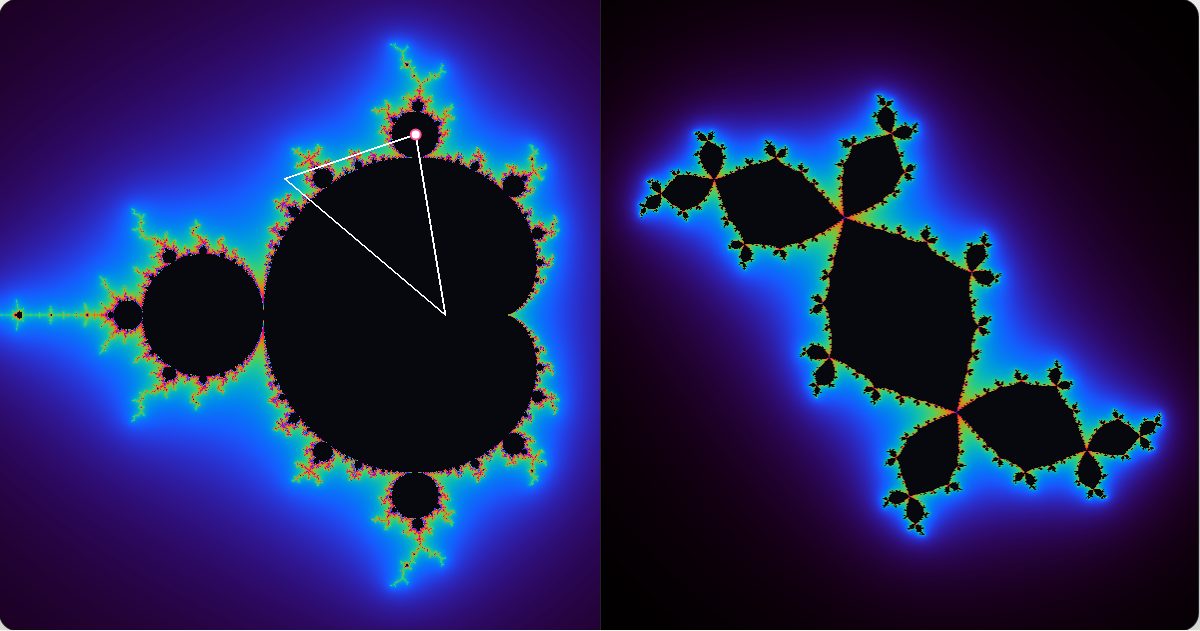
This is the Mandelbrot set. Tap any point on its edge to magnify it three times. And again. And again. How far can you go?

What just happened?

No matter how far you zoom in, the edge never becomes smooth: spirals, branches and tiny copies of the whole shape keep appearing. All of it comes from repeating a single operation with numbers. It is the most famous kind of fractal.

Explore it in depth →

Preparing the experiment…

05

A growing population

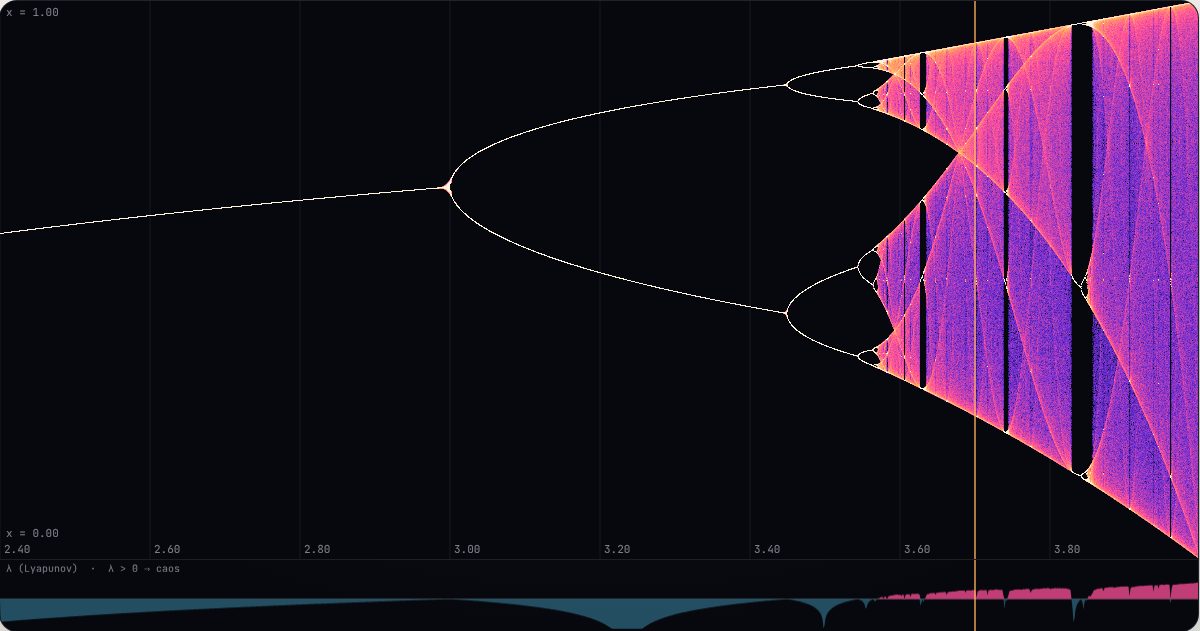
Imagine rabbits in a meadow: if there are few, they multiply; if there are too many, food runs short. Move the “Urge to grow” slider from left to right and watch what happens to the number of rabbits.

What just happened?

With a small urge to grow, the population stays still. If you turn it up, it starts to jump between two values, then four, eight… until suddenly it never repeats at all: that is chaos, even though the rule is always the same and very simple. It is the logistic map.

Explore it in depth →

Preparing the experiment…